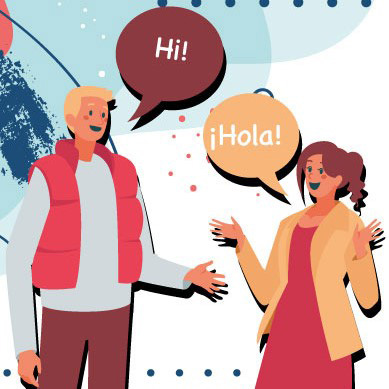

¿Te conviertes en otra persona al hablar otro idioma?
El cambio no es solo en las palabras, sino en nuestra voz, gestos e incluso personalidad. La ciencia confirma que, al hablar otro idioma, construimos un “alter ego” lingüístico. Esta es la base de nuestra discusión. Hemos preparado una lista de preguntas para explorar esta fascinante metamorfosis. ¡Elige una categoría y comienza la conversación!
Aprende Más
BBC → Por qué cambiamos nuestra forma de hablar cuando nos expresamos en otro idioma
PDF → Concordia Working Papers in Applied Linguistics
Se Habla → You Are An Actor
Se Habla ⇒ Conversation Topics
I. Experiencia Personal y Observación (Personal Experience and Observation)
English Questions
Do you ever feel like a slightly different person when you switch from your native language to the other language? If so, how?
Have you noticed changes in your voice, gestures, or energy level when you speak English/Spanish? Describe them.
The text uses the analogy of an “actor’s job.” Do you feel like you are “performing” a role when speaking your second language?
Do native speakers of the other language ever tell you that you sound different than you look?
In which language do you feel more spontaneous or more reserved? Why do you think that is?
Spanish Questions
¿Alguna vez te sientes como una persona ligeramente diferente cuando cambias de tu lengua materna a la otra? Si es así, ¿de qué manera?
¿Has notado cambios en tu voz, tus gestos o tu nivel de energía cuando hablas inglés/español? Descríbelos.
El texto utiliza la analogía del “trabajo de un actor.” ¿Sientes que estás “actuando” un papel cuando hablas tu segundo idioma?
¿Los hablantes nativos del otro idioma alguna vez te dicen que suenas diferente de lo que pareces?
¿En qué idioma te sientes más espontáneo o más reservado? ¿Por qué crees que pasa esto?

II. Identidad y Percepción Social (Identity and Social Perception)
English Questions
The research found that listeners attribute different personality traits to a person based on the language they speak (e.g., “more confident” or “warmer”). What personality traits do you think your English/Spanish ‘alter ego’ projects?
How does the context (work, family, friends) shape the version of yourself that emerges in the other language?
Do you feel more comfortable expressing certain emotions (anger, affection, humor) in one language over the other?
If your English and Spanish voices were two different characters in a film, what would their relationship be like?
The text says this process is “unconscious.” Do you agree, or do you sometimes consciously choose a certain tone or rhythm?
Spanish Questions
La investigación encontró que los oyentes atribuyen diferentes rasgos de personalidad a una persona según el idioma que habla. ¿Qué rasgos de personalidad crees que proyecta tu ‘alter ego’ en inglés/español?
¿Cómo el contexto (trabajo, familia, amigos) moldea la versión de ti mismo que surge en el otro idioma?
¿Te sientes más cómodo expresando ciertas emociones (ira, afecto, humor) en un idioma que en el otro?
Si tu voz en inglés y en español fueran dos personajes diferentes en una película, ¿cómo sería su relación?
El texto dice que este proceso es “unconsciente.” ¿Estás de acuerdo, o a veces eliges conscientemente un tono o ritmo determinado?
III. Implicaciones para el Aprendizaje (Implications for Learning)
English Questions
The text suggests that fluency is not just grammar but also embodying the “music” (rhythm and intonation) of the language. How important is achieving native-like rhythm and intonation to you?
Do you think language teachers should emphasize acting and cultural scripts more in the classroom, rather than just vocabulary and structure?
How does fear of having a “bad” accent affect your willingness to speak and embody your linguistic “alter ego”?
The study mentions that Spanish is a “syllable-timed” language and English is “stress-timed.” Do you notice this difference in rhythm, and how hard is it to adapt?
Spanish Questions
El texto sugiere que la fluidez no es solo gramática, sino también encarnar la “música” (ritmo y entonación) del idioma. ¿Qué tan importante es para ti lograr un ritmo y una entonación cercanos a los de un nativo?
¿Crees que los profesores de idiomas deberían enfatizar más la actuación y los guiones culturales en el aula, en lugar de solo vocabulario y estructura?
¿Cómo afecta el miedo a tener un “mal” acento a tu disposición para hablar y encarnar a tu “alter ego” lingüístico?
El estudio menciona que el español es un idioma “de ritmo silábico” y el inglés es “de ritmo acentual.” ¿Notas esta diferencia en el ritmo y qué tan difícil es adaptarte?

